
-
 Call: +91-9840269190
-
 Mail: hr@voltechgroup.com

Why Candidates Don't Join After Accepting Offers
Why Candidates Don't Join After Accepting Offers: Causes, Data & How to Fix It
- By Voltech HR Services Team
- Published: 24 July 2026
TL;DR
Candidates accept an offer and then don't join mainly because of counter-offers, long notice periods (60-90 days), unclear compensation details discovered late, and poor post-offer communication from the employer. In India, senior-role offer acceptance runs roughly 55-65% even through structured hiring channels, and around 1 in 4 employers now name candidate drop-out as their single biggest recruiting challenge. The fix isn't a bigger salary counter - it's treating the gap between "yes" and "Day 1" as its own funnel, with a defined engagement cadence, a joining risk score and a backup pipeline for critical roles. This guide breaks down every major reason, what the 2026 data shows, and the exact system recruitment and HR teams use to close it.
Key Takeaways:
• The right time to build a post-offer engagement system is before your next critical hire accepts - not after the third no-show in a quarter.
What Is Offer-to-Joining Dropout?
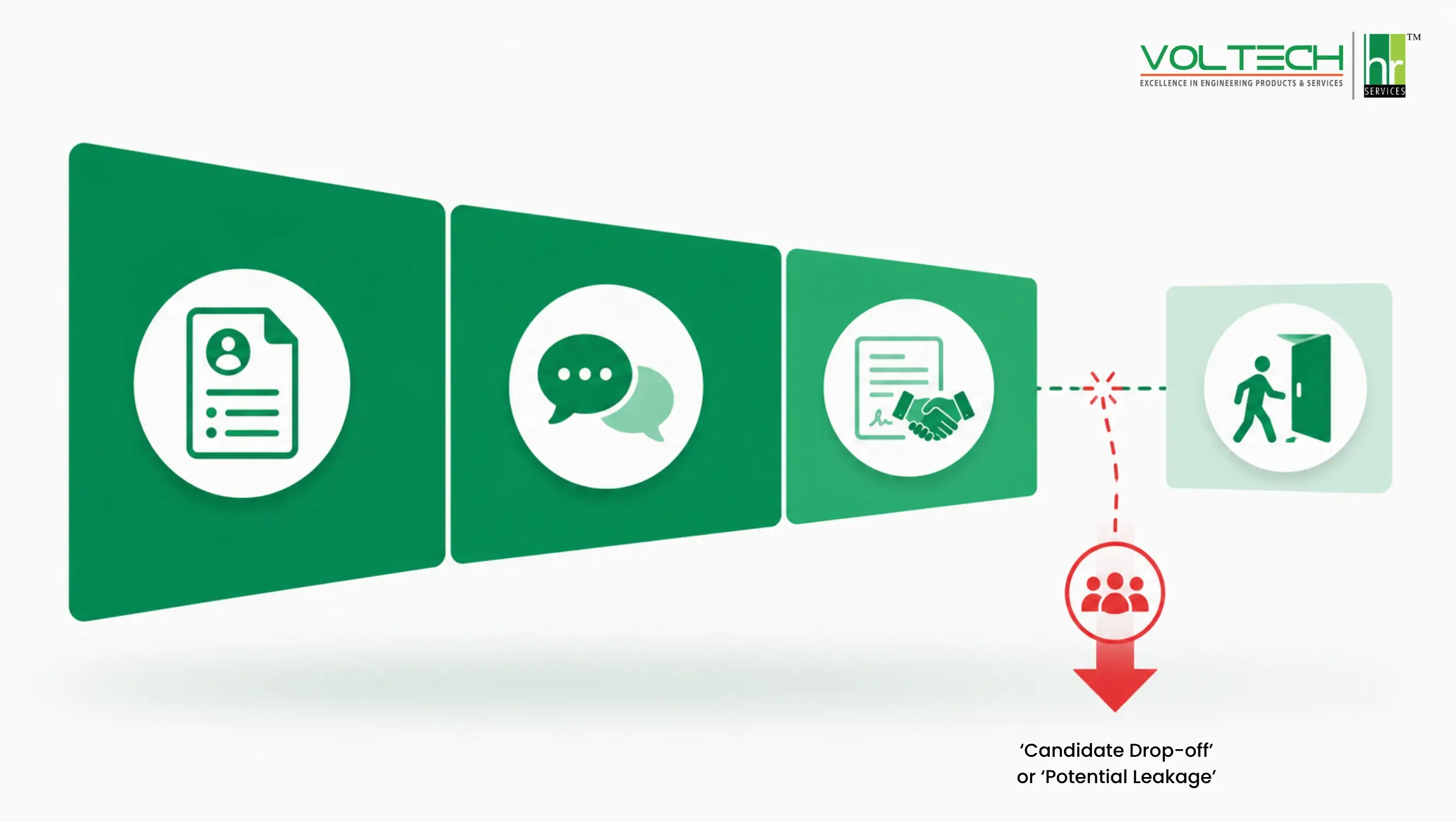
Offer-to-joining dropout - also called post-offer ghosting, offer reneging, or simply a "no-show" - is when a candidate formally accepts a job offer, sometimes even signs the offer letter, and then delays joining, goes silent, or never shows up on the agreed start date.
It's different from an outright offer decline. A decline happens before acceptance. A dropout happens after acceptance, once the employer has already stopped sourcing, informed the team and blocked a start date. That's what makes it expensive - the requisition is already closed internally by the time it happens.
How Common Is Offer Dropout in 2026?
Post-offer dropout has grown alongside a broader rise in two-way ghosting across hiring. The numbers below are the ones HR and talent acquisition teams are currently citing:
| Metric | Data Point (2026) |
|---|---|
| Offer acceptance rate for senior roles in India (structured hiring channels) | Roughly 55-65% |
| Employers naming candidate drop-out their single biggest recruiting challenge | About 1 in 4 |
| Candidates who decline or disengage after a poor hiring experience | Roughly half |
| Candidates who accept the first offer they receive (speed matters most) | Around 6 in 10 |
| Candidates who say salary details changed after several interview rounds | Over 4 in 10 |
| Indian recruiters who report being ghosted by candidates at some stage | Roughly 3 in 4 |
Figures reflect prevailing 2026 recruitment industry benchmarks and survey data cited across HR and talent-acquisition publications; exact numbers vary by source, seniority level and hiring channel.
Two patterns sit behind these numbers. First, dropout is rarely about one bad candidate - it's a leak in the process, and it shows up at a predictable stage rather than randomly. Second, speed and communication move the needle more than salary alone. Employers who respond quickly and stay in touch during the notice period lose noticeably fewer candidates than those who go quiet once the offer letter is out.
Top Reasons Candidates Accept Offers but Don't Join
Compliance-style thinking helps here too: dropout usually isn't one big failure, it's several small, recurring gaps that compound during the notice period.
| Reason | Why It Happens |
|---|---|
| Counter-offers | Replacing a mid-to-senior employee costs a large multiple of salary, so a hike or promotion is almost always cheaper for the current employer than losing them |
| Long notice periods (60-90 days) | More time for competing offers, more calls from other recruiters, more chances to be pulled elsewhere |
| Multiple offers held open | Acceptance treated as a placeholder while waiting on a preferred offer, common with senior, in-demand candidates |
| Compensation clarity issues | Fixed-vs-variable split, deductions or probation terms turn out different from what was understood at acceptance |
| Poor post-offer communication | Employer goes quiet after the offer is signed; candidate reads the silence as low priority and disengages in return |
| Culture or role mismatch discovered late | Further research after accepting (reviews, current employees) reveals a gap between the interview pitch and the real role |
| Family and relocation constraints | A job change involving relocation is often a family decision in India, not just an individual one |
| Slow documentation & background checks | Every extra delay in offer-letter release or BGV is another window for a faster employer to close the deal first |
The Real Cost of Offer Dropouts
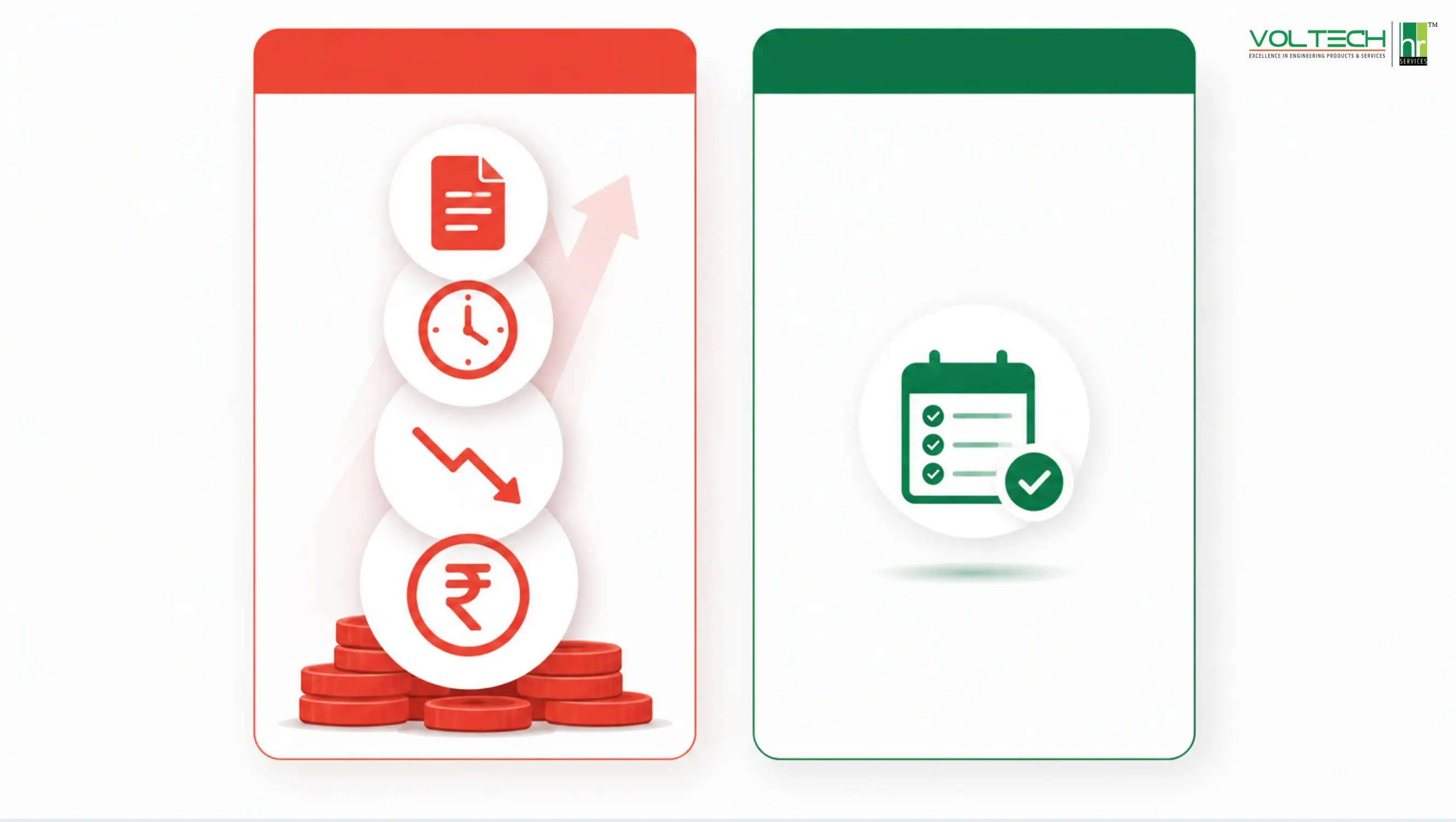
Offer dropout isn't just an inconvenience - it has a compounding cost:
- Re-sourcing from zero - the requisition is often closed internally once an offer is accepted, so a dropout means restarting the funnel, not just moving to a backup.
- Delayed projects and revenue - roles left open past their planned start date push back deliverables, client commitments and revenue targets tied to headcount.
- Higher cost-per-hire - every dropout adds sourcing, screening and interview hours that don't convert into a hire.
- Team strain - existing employees absorb the workload gap, which can quietly raise attrition risk on the team that was expecting the new hire.
- Employer brand damage - candidates who had a poor experience talk about it publicly on platforms like AmbitionBox and Glassdoor, shaping how the next candidate reads your offer.
How Employers Can Reduce Offer-to-Joining Dropouts
Treat the period between acceptance and joining as its own mini-funnel, not a waiting room. A simple cadence works well:
• Day 30+ (or closer to joining): Final joining confirmation and logistics check.
Candidates who hear from their future manager before their start date form an identity connection with the team early, which measurably improves show-up rates.
Shorten Time-to-Decision Wherever Possible
Since a large share of candidates accept whichever offer arrives first, speed is a competitive advantage independent of salary. Compress interview rounds, set internal SLAs for feedback turnaround, and release the offer letter as soon as approvals are done rather than batching it with other admin tasks.
Address Notice-Period Risk Explicitly
Don't treat a long notice period as someone else's problem. Ask directly about buyout options, negotiate an earlier release with the current employer where possible, and - for high-risk roles - build a defined backup plan rather than discovering the risk on the joining date.
Make Compensation Details Unambiguous Before Acceptance
Share a full breakdown - fixed pay, variable pay, incentives, deductions and probation terms - before the candidate says yes, not after. Ambiguity here is one of the most preventable causes of dropout, and it's entirely within the employer's control.
Score Joining Risk Like a Sales Pipeline
Some recruitment teams now formally score each accepted candidate on signals like notice period length, likelihood of a counter-offer, response speed after the offer, relocation complexity and family decision dependency. High-risk candidates get more frequent check-ins and an active backup, rather than the same treatment as a low-risk local hire on a two-week notice.
Keep a Warm Backup for Critical Roles
For business-critical positions, maintaining one or two "warm" backup candidates through the notice period isn't wasted effort - it's the cheapest insurance against a restart from zero.
Train Managers to Own the Relationship, Not Just HR
A reporting manager who reaches out personally within the first week after acceptance does more to secure a join than any number of generic HR emails. Make that outreach a standard part of the hiring process, not an optional nice-to-have.
Red Flags That a Candidate Might Not Join
Watch for these signals during the notice period:
- Slower response times to routine emails or document requests after previously being prompt
- Vague or repeatedly postponed joining-date confirmations
- Reluctance to complete pre-joining formalities (background checks, medical, IT setup)
- Mentioning they're "still wrapping things up" well past a reasonable handover timeline
- Sudden unavailability for the pre-joining or hiring-manager call
- Asking again about flexibility on the start date without a clear reason
None of these guarantee a dropout on their own, but two or more together are worth a direct, honest conversation rather than a wait-and-see approach.
Ready to Stop Losing Candidates Between Offer and Joining?
Reducing offer-to-joining dropout in 2026 comes down to running a structured post-offer engagement plan - one that treats the notice period as an active part of hiring, not a waiting room. Partnering with a trusted recruitment partner in India is how growing companies keep their joining ratio high instead of restarting sourcing every time an offer falls through.
Frequently Asked Questions About Candidates Not Joining After Accepting Offers
Q1. Why do candidates accept a job offer and then not join?
The most common reasons are a counter-offer from their current employer, a long notice period that leaves time for other opportunities to surface, unclear or mismatched compensation details discovered after acceptance, and a lack of communication from the new employer during the notice period.
Q2. Is offer-to-joining dropout more common in India?
Long notice periods (often 60-90 days for experienced hires), a strong culture of counter-offers, and family-influenced relocation decisions make India particularly prone to post-offer dropout compared to markets with shorter notice periods and faster hiring cycles.
Q3. What is a "Joining Risk Score" in recruitment?
It's a scoring method some recruitment and HR teams use to rate how likely an accepted candidate is to actually join, based on factors like notice period length, counter-offer probability, responsiveness after acceptance, and relocation or family constraints. High-risk candidates get closer follow-up and backup planning.
Q4. How can HR reduce the chances of a candidate backing out after accepting an offer?
Stay in regular contact during the notice period, get the hiring manager involved early, make compensation and role details completely clear before acceptance, speed up documentation, and address notice-period risk directly instead of hoping it resolves on its own.
Q5. Should employers offer a counter-offer match to prevent losing new hires elsewhere?
Matching an outgoing counter-offer usually isn't the fix - the underlying issue is that the candidate wasn't fully committed before accepting. It's more effective to focus on faster decisions, clear communication and strong manager engagement during the notice period.
Q6. What should a company do if a candidate stops responding after accepting an offer?
Reach out through multiple channels (call, email, and if available, their manager or referral contact), give a clear but reasonable deadline for a response, and activate a backup candidate if there's no response by that deadline. Document the timeline in case the role needs to be reopened.
Q7. Does a long notice period really increase the chance a candidate won't join?
Yes - the longer the gap between acceptance and the start date, the more time a candidate has to receive a counter-offer, get pulled into another interview process, or run into personal circumstances that change their plans. Dropout risk rises noticeably once the notice period passes about 60 days.
Q8. How much does a candidate not joining actually cost a company?
Beyond the direct cost of restarting sourcing and interviews, a dropout delays the project or role the hire was meant to fill, adds pressure on the existing team, and can push back revenue or delivery timelines tied to that headcount - on top of the recruiter and hiring-manager hours already spent.
Related Resources for Hiring & Workforce Planning
Looking to strengthen your hiring process beyond offer management? Explore our other guides:
→ Global and Domestic Recruitment Agency in India - How a single recruitment and workforce partner reduces drop-off risk from sourcing through joining.
→ Fast and Accurate Background Verification Services in India - Why a quick, well-run BGV process shortens the offer-to-joining window instead of adding friction to it.
→ Staffing & Payroll Services in India to Avoid Compliance Risks - How clean compensation and compliance processing removes one of the most preventable dropout triggers.
About the Author:
This guide was prepared by the Voltech HR Services Team, which has spent over 10 years managing recruitment, staffing and payroll for Indian businesses across manufacturing, IT, retail and services.
We work directly with business owners, HR managers and talent acquisition teams to close the gap between an accepted offer and an actual Day 1 - so critical hires show up when they're expected, and requisitions don't have to restart from zero.
Ready to Improve Your Offer-to-Joining Ratio?
Voltech HR Services handles recruitment, staffing and payroll compliance as one connected process - so your accepted candidates stay engaged all the way to Day 1, not just to the offer letter.
www.voltechhrservices.comRecruitment India | Offer-to-Joining Management | Staffing Solutions | Candidate Engagement | End-to-End HR Outsourcing
Write Comment